


Swetha Singari
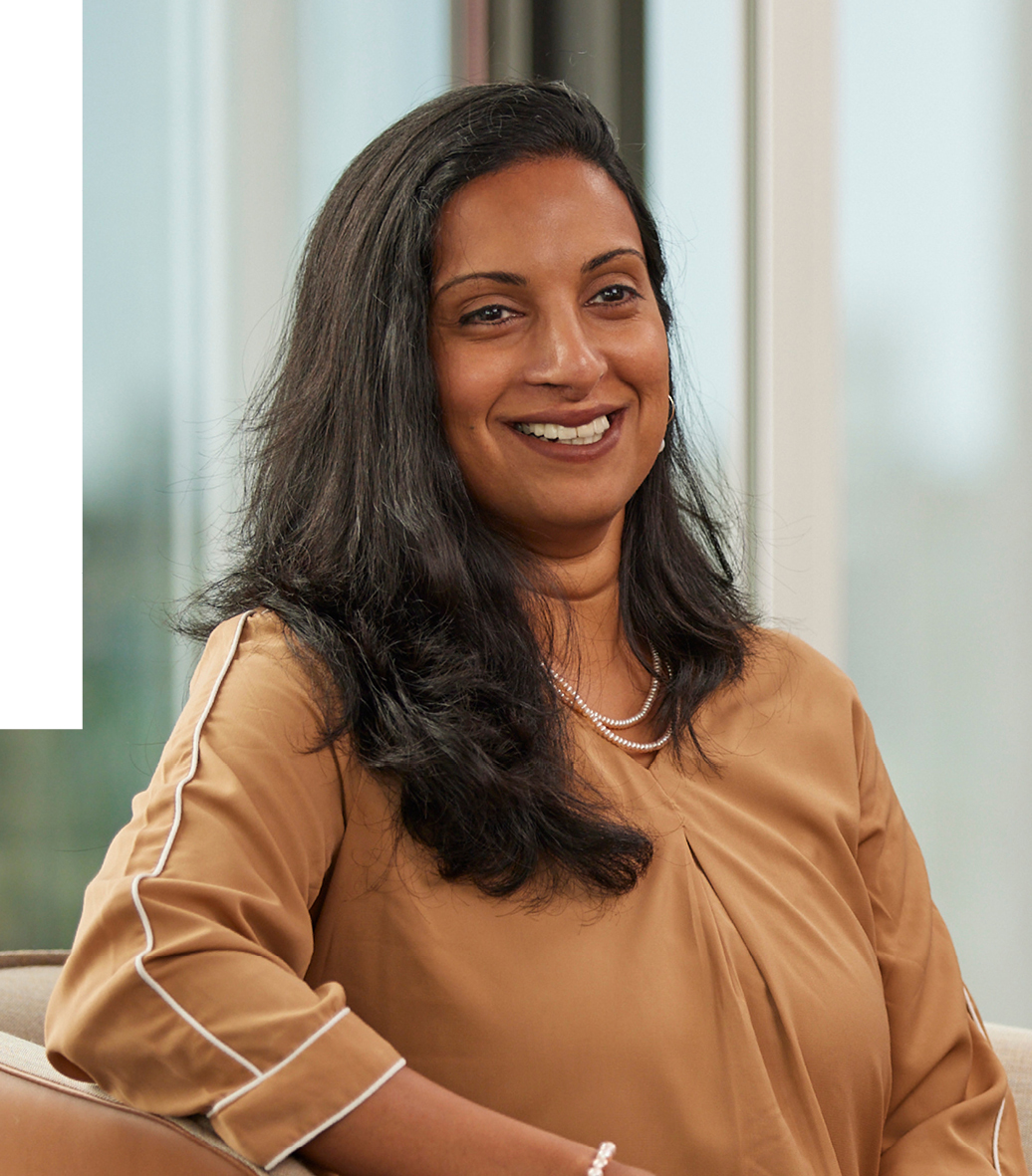
Current role:
KordaMentha Process Improvement Manager (Director)
Last role at Charter Hall:
Delivery Manager
Time at Charter Hall:
2018 – 2022
What career achievement are you most proud of?
Securing a $245,000 Victorian Government grant for the Victoria State Rose Garden—a five-hectare landmark maintained by volunteers and Parks Victoria—is my proudest achievement. This funding will construct a community shelter and gazebo for the dedicated volunteers who work through Melbourne’s cold winters to maintain 5,000 roses.
Writing the submission felt like the ultimate culmination of my 'melting pot' career. I drew on my research and writing days from my Cell Biology thesis to the project business cases I’ve developed throughout my Technology, MBA, and Project Management roles. Delivering such a tangible benefit for the community I now call home was truly my 'wake up and smell the roses' moment.
What is the most valuable lesson you learnt during your time at Charter Hall?
Before joining Charter Hall, I viewed the property industry through a purely functional lens. My most valuable lesson was discovering how property and places profoundly impact the people who live, work, or even pass through them. I learnt the critical distinction between good and great design and how thoughtful spaces in both physical and digital mediums can foster community and wellbeing.
In fact, some of my fondest memories at Charter Hall were made in the kitchen. Because we were encouraged not to eat at our desks, those communal spaces became the heart of our interactions. It was there that I truly experienced how intentional design and experiences can shift a workplace culture.
Who would sit around the table at your ideal dinner party?
I thrive on learning and teaching through storytelling, so my ideal dinner party would be a celebration of the people who taught me up close and from afar.
The first group consists of my family, teachers, and mentors who nurtured me personally: my parents, my aunt, my 7th-grade Social Studies teacher, my music teacher, my best friend of 22 years, and several key career mentors from India, America and Australia.
Next, I’d invite the master storytellers who fed my curiosity and taught me to experience the world differently through their work: Carl Sagan, Anant Pai, Hayao Miyazaki, James Cameron, Christopher Nolan, Ilayaraja, Hans Zimmer, and Beyoncé.
What are you currently working on that has you excited?
As a problem solver, it is an exciting era to experiment with AI. However, the most rewarding part of my current work is the 'detective work' involved in advising on which challenges require true AI versus those that can be elegantly solved through automation or simple process changes. This distinction is critical; it ensures that technology serves as a purposeful tool rather than just a trend. Currently, I’m deep into 'The Case of the Data Deluge'—untangling the vast volumes of information in real estate transactions to find the signal in the noise.
Our Alumni is founded on the idea of ‘Connection for life’, how have you embraced this?
Charter Hall was my first workplace when I moved from the USA, and it served as my cultural compass—it’s where I learned everything from Australian business practices to the local lingo and culture. I’ve embraced ‘Connection for Life’ through a mentorship with my manager spanning eight years, who has guided me through various career stages, and ultimately led me to my current role.
Beyond professional guidance, I found a lifelong bond with a Charter Hall colleague who became like a brother to me, supporting my family’s transition to a new country. Whether it’s attending alumni events or visiting the Sydney office, I remain a proud 'Charter Hall girl'—a title my current colleagues use fondly to describe my enduring ties to the firm. My experiences at Charter Hall make up a big part of my professional and personal Australian story.
As a program and transformation professional working within complex systems, what have you learnt really enables change to stick?
In complex systems and big companies, I’ve learnt that change only sticks when leadership does more than just agree on the vision—they must actively manage the competing priorities at the grassroots level. It can’t simply be a matter of piling 'change work' on top of existing workloads. For a shift to be sustainable, leaders must be willing to prioritise some tasks, ensuring their teams have the actual capacity and support to adopt new ways of working rather than just surviving the transition. Change also requires a shared narrative that is repeatedly told and reinforced throughout the life of the project.
With a strong interest in emerging technologies, what’s exciting you most about where organisations – and roles like yours – are heading next?
In the current age of AI, what excites me most is the shift from curiosity to principled application. The challenging and rewarding part of my role is to differentiate between the noise of the hype and the actual, sustainable usability of these tools. Beyond the technical challenge, I want to simultaneously weigh the environmental, ethical, and social impacts of the compute power involved. Looking ahead, roles like mine will no longer just be about what problems we can solve, but 'should we solve them this way?' My focus is on tackling high-value problems efficiently, without eliminating the creativity or unique points of difference that make a business or a person stand out. It’s about deploying intelligent solutions that are high-impact, while being ethically grounded in sustainability.

-
© Charter Hall Group, 2026.
- Terms of Use
- Privacy Policy
- Complaints Guide

