


Australia’s prime Industrial & Logistics (I&L): delivering durability through volatility
Share this page
 LINKEDIN
 FACEBOOK
 TWITTER
 EMAIL
 9 mins
 Share
By proceeding you confirm that you are a resident of Australia or New Zealand accessing this website from within Australia or New Zealand and you represent, warrant and agree that:
- you are not in the United States or a “U.S. person”, as defined in Regulation S under the U.S. Securities Act of 1933, as amended (“U.S. Person”), nor are you acting for the account or benefit of a U.S. Person;
- you will not make a copy of the documents on this website available to, or distribute a copy of such documents to, or for the account or benefit of, any U.S. Person or any person in any other place in which, or to any other person to whom, it would be unlawful to do so; and
- the state, territory or province and postcode provided by you below for your primary residence in Australia or New Zealand are true and accurate.
Unfortunately, legal restrictions prevent us from allowing you access to this website. If you have any questions, please contact us by e-mail by clicking on the link below.
Australia’s prime I&L sector continues to benefit from resilient tenant and investment demand, constrained new supply and long-duration, quality cashflows.
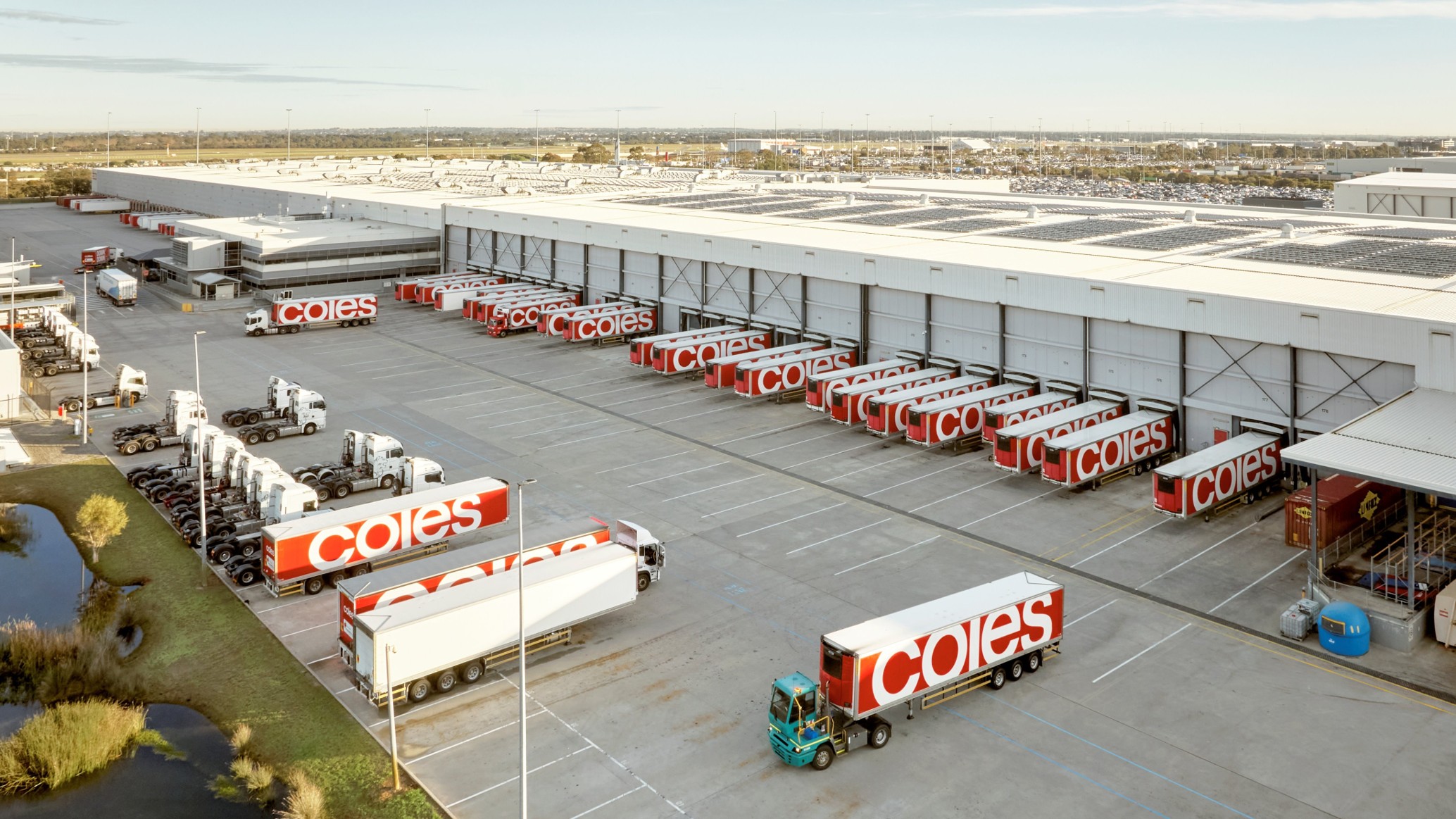
Image: 120 Horrie Miller Drive, Perth WA
Structural demand driving long-term growth
Global markets have endured ongoing turbulence as the geopolitical and economic landscape continues to evolve. Against this backdrop, Australia’s commercial real estate (CRE) has remained resilient, supported by leading economic fundamentals and structural long-term drivers. In a volatile economic environment, Australia is expected to continue to outperform major economy peers across population, gross domestic product (GDP) and employment growth over the medium term.
Australia’s CRE is also emerging from the largest repricing cycle since the early 1990s. Such periods have historically presented attractive entry points. The rebasing to higher interest rates and accelerating income growth has supported the performance of the sectors. Australia’s unlisted CRE sector returns have outpaced the other major investment classes (Table 1).
Table 1: Total Return (rolling annual % p.a. to Sep-26)
| Unlisted CRE - Core Wholesale (Benchmark) | 9.4 |
| Australian Property Equities: MSCI Index | -15.2 |
| Australian Equities: MSCI Index | 4.1 |
| J.P. Morgan Australia 7 - 10 Year Bonds | -3.3 |
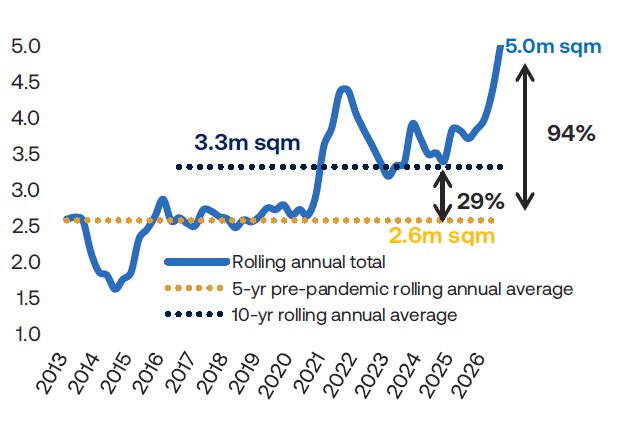
Within this broader recovery, Australian I&L has been the beneficiary of structural change, with changes in technology and consumer behaviour through online shopping contributing to longer-term demand. Due to this, leasing demand remains well above historical levels with annual volumes to Sep-26 approximately 94% above the pre-pandemic 5-year rolling average (Figure 1), while vacancy across Australia’s major I&L markets remains among the lowest globally.
Over the past two decades, Australia’s I&L sector has delivered industry-leading returns of approximately 10.2% p.a., outperforming comparable global industrial real estate markets while doing so with lower volatility. Longer-run analysis also highlights the strength of Australian unlisted prime I&L, which has delivered attractive returns relative to listed equities, bonds, cash and other CRE sectors over a 30-year period.
Rental income from tenants, supported by long leases, structured rental increases and financially strong tenants, can provide the quality and durability of cashflows through periods of volatility. Scarcity of affordable, well-located development land also supports the potential for capital growth over the long term.
The sector is benefiting from a combination of cyclical and structural drivers. Population growth and ongoing infrastructure investment are supporting consumption-led demand, while online shopping, automation and quicker delivery timeframes are lifting requirements for modern, efficient and well-connected I&L space.
For tenants, I&L facilities are increasingly viewed as critical infrastructure rather than simply warehouse space. Geopolitical volatility and supply chain disruption are reinforcing the need for resilient supply chains that support inventory availability, flexibility and faster delivery at lower costs. This is increasing demand for modern assets in established precincts with access to labour, power and major transport links, enabling tenants to hold stock closer to end customers, move goods quickly and adapt as supply chains evolve.
Figure 1: Leasing demand rolling annual volumes (million sqm)
Demand for data centres driving I&L demand
Data centre growth adds another I&L demand layer, driving warehouse requirements from suppliers and contractors that support digital infrastructure, while also increasing competition for the same large, serviced land parcels, power and infrastructure needed by traditional logistics users. This has been particularly evident in Sydney and Melbourne, where 27% of land take-up in CY25 was by data centre operators, with this trend continuing into this year. The trend is anticipated to also extend to other major markets as the data centre expansion progresses.
Data centre operators are paying significant premiums for power-connected sites in strategic locations, with land pricing premiums up to 67% in some cases (Figure 2). This growing competition for land can make new traditional I&L development more challenging, reinforcing the scarcity value of existing prime industrial assets. With rising ‘not-in-my-back-yard’ opposition to sites adjacent to residential areas, combined with availability for power and water, established I&L precincts will be the recipient of increased data centre land demand.
Figure 2: Sydney Data Centre Land Pricing Premium to Industrial Buyers ($/sqm), Transactions since 2020

Constrained supply reinforcing scarcity value of existing prime industrial assets
New development stock across the Australian I&L market reached historical highs through CY24, reflecting the delayed response to the exceptional tenant demand recorded over the years prior. However, this new supply was largely met by strong leasing activity, limiting the increase in vacancy.
Looking forward, new supply is expected to fall materially, with forecasts indicating a decline of around 50% from the CY24 peak by CY27. Limited zoned land, infrastructure access, labour availability and rising material costs need to be offset by higher rents or asset values to enable the viability of new construction. This has resulted in a significant decline in speculative development, with developers choosing to secure tenant pre-commitments ahead of commencing any construction.
Replacement costs, the cost to buy land and build a comparable new warehouse today, continue to shape market outcomes. Construction costs remain elevated and industrial land values have risen significantly (Figure 3).
Figure 3: Land value growth, by market (to Jun-26)
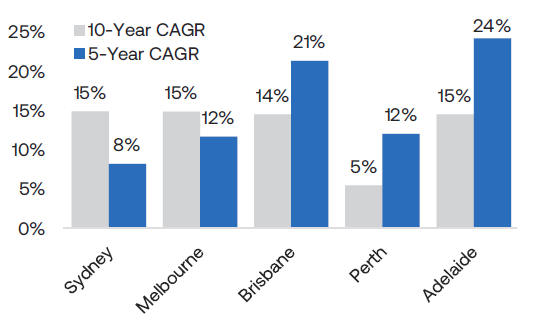
This is set to continue with agency forecasts anticipating future data centre sales could contribute to a further 10%+ per annum increase in land values across Sydney and Melbourne over the next three years. These compounding factors are limiting the ability of new I&L supply to meet demand in the next cycle.
Low vacancy remains a defining feature of the Australian market. While vacancy has increased from unsustainably tight levels, it remains low relative to global peers and below balanced-market conditions (~5%), supporting tenant competition and rental growth resilience. These conditions point to a more sustainable, income-led growth phase. The demand and supply equation remains favourable, particularly in markets where land, power and transport infrastructure are increasingly difficult to secure.
I&L entering the next cycle from position of strength
Capital market activity has begun to reflect the sector’s positive outlook. I&L transaction volumes have recovered and are now running approximately 82% above long-term averages, with stronger buyer Raw & Zoned Zoned & Serviced Developers & Owner Occupiers Zoned, Benched & Serviced Data Centres interest from both domestic and global capital. Following repricing, Australian I&L offers an attractive entry point. With interest rates at or approaching peak levels, I&L total return indicators improving and the sector again leading the core property sectors, stabilising capitalisation rates and income growth should support capital value recovery. Near-term rising interest rates should make new supply more challenging.
Assets with high occupancy, long leases, resilient tenants, modern specifications and locations close to major population centres are likely to remain well supported. Active asset management can further protect income quality by focusing on tenant retention, contracted rent reviews and the strategic value of each asset.
Australia’s I&L sector enters the next cycle from a position of strength. Attractive entry yields, durable income and improving capital markets offer the potential for resilient income and capital growth as values recover. Returns will favour high-quality, well-located assets where active management can unlock rental growth and long-term value.
Key takeaways
− Resilient demand: E-commerce, population growth and data centre expansion underpin demand.
− Constrained supply: Scarce land and high development costs limit new supply.
− Income-led recovery: Durable cashflows support income and capital growth potential.
Source: CBRE Research, Charter Hall Research, Cushman & Wakefield Research, JLL Research, MSCI.
This article is not intended to be and does not constitute a Product Disclosure Statement or disclosure document as those terms are defined in the Corporations Act 2001 (Cth). It is not an offer to buy or sell any financial product and should not be relied on in making an investment decision. The information is general in nature and does not take into account your investment objectives, particular needs or financial situation. Whilst all care has been taken in preparation of this article CHDPML does not give any representation or warranty as to the reliability, completeness or accuracy of the information contained in this article. CHDPML does not accept liability for any inaccurate, incomplete or omitted information of any kind or any losses caused by using this information. Any forward-looking statement in this article is predictive in character and may be affected by inaccurate assumptions or by known or unknown risks and uncertainties and may differ materially from results ultimately achieved. Past performance is not a reliable indicator of future performance. The comparison to each asset class is not intended to compare the risks of holding an investment in the product to a holding in a different asset class. The returns of different asset classes come with distinct risks which are demonstrated in the information provided above. Photographs used in this article are for illustrative purposes only. Unless otherwise specified, photographs are of assets in Charter Hall funds. All figures stated in this article are as at 30 September 2026.
© Charter Hall Group.

Talk to us
Thanks for your interest in Charter Hall. Fill in your details below and we’ll get back to you as soon as possible.
I am interested in
Enquiry
*Indicates that this field is required.
All personal information submitted will be treated in accordance with our privacy policy.
By registering and/or submitting personal data to Charter Hall, you agree that, where it is permitted by law and in accordance with our Privacy Statement or where you have agreed to receive communications from us, Charter Hall may use this information to notify you of our products and services and seek your feedback on our products and services. Please note you can manually opt out of any communications.

-
© Charter Hall Group, 2026.
- Terms of Use
- Privacy Policy
- Complaints Guide

